
PRISM Collective
Oct 2024 - Present
Description
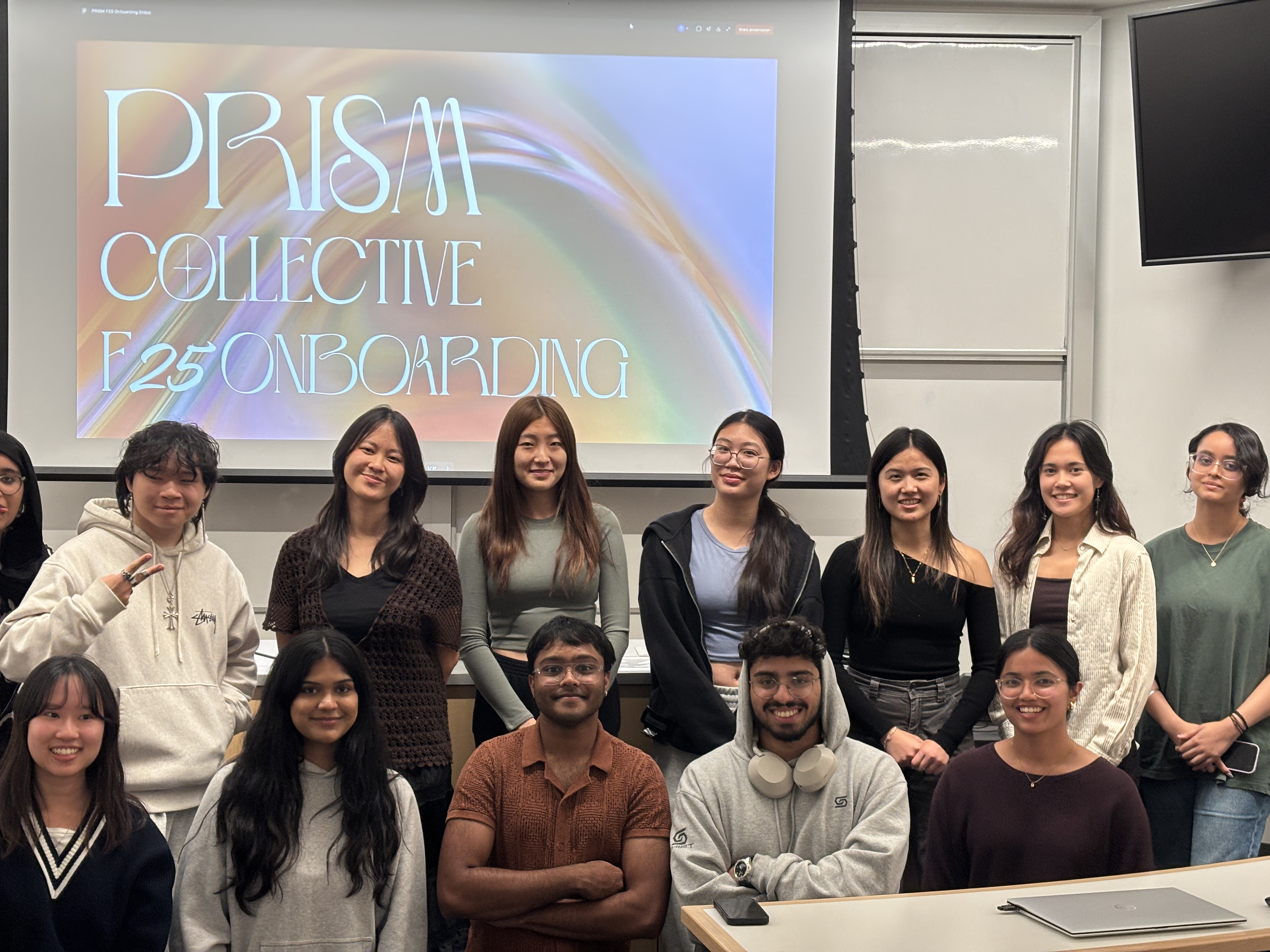
PRISM Collective is a creative technology community I co-founded at the University of Waterloo to bridge the gap between technical research and experiential public art. We are a multidisciplinary group of engineers, artists, designers, and researchers building interactive installations, kinetic sculptures, and immersive experiences that make emerging technologies tangible and accessible.
In under 6 months, PRISM has grown to become Waterloo's largest creative tech collective, with 120+ active members collaborating on projects spanning robotics, generative art, spatial computing, biosignals, and experimental human-computer interaction. We've exhibited work at museums, public spaces, and academic symposia, reaching audiences of over 2000+ people.
Mission & Philosophy
Bridging Research and Public Engagement
Academic research often remains confined to conference proceedings and laboratory prototypes, inaccessible to broader audiences. PRISM serves as a translation layer, transforming technical concepts into visceral experiences that provoke curiosity, wonder, and critical dialogue about technology's role in society.
Core principles:
- Research-Driven Creation: Projects grounded in emerging scientific and engineering research (e.g., affective computing, soft robotics, spatial audio)
- Public Accessibility: Prioritize experiential learning over technical jargon; design for diverse audiences including children, non-technical adults, and domain experts
- Experimental Courage: Embrace technical and aesthetic risk; value novel failures over incremental successes
- Interdisciplinary Collaboration: Actively recruit outside traditional engineering/CS domains (fine arts, music, philosophy, social sciences)
- Open Knowledge Sharing: Document processes, release open-source code/CAD, and mentor newcomers through workshops
Community Structure
PRISM operates as a non-hierarchical collective with distributed leadership:
- Project Teams: Self-organizing groups of 3-8 members working on specific installations (e.g., kinetic sculpture team, VR experience team)
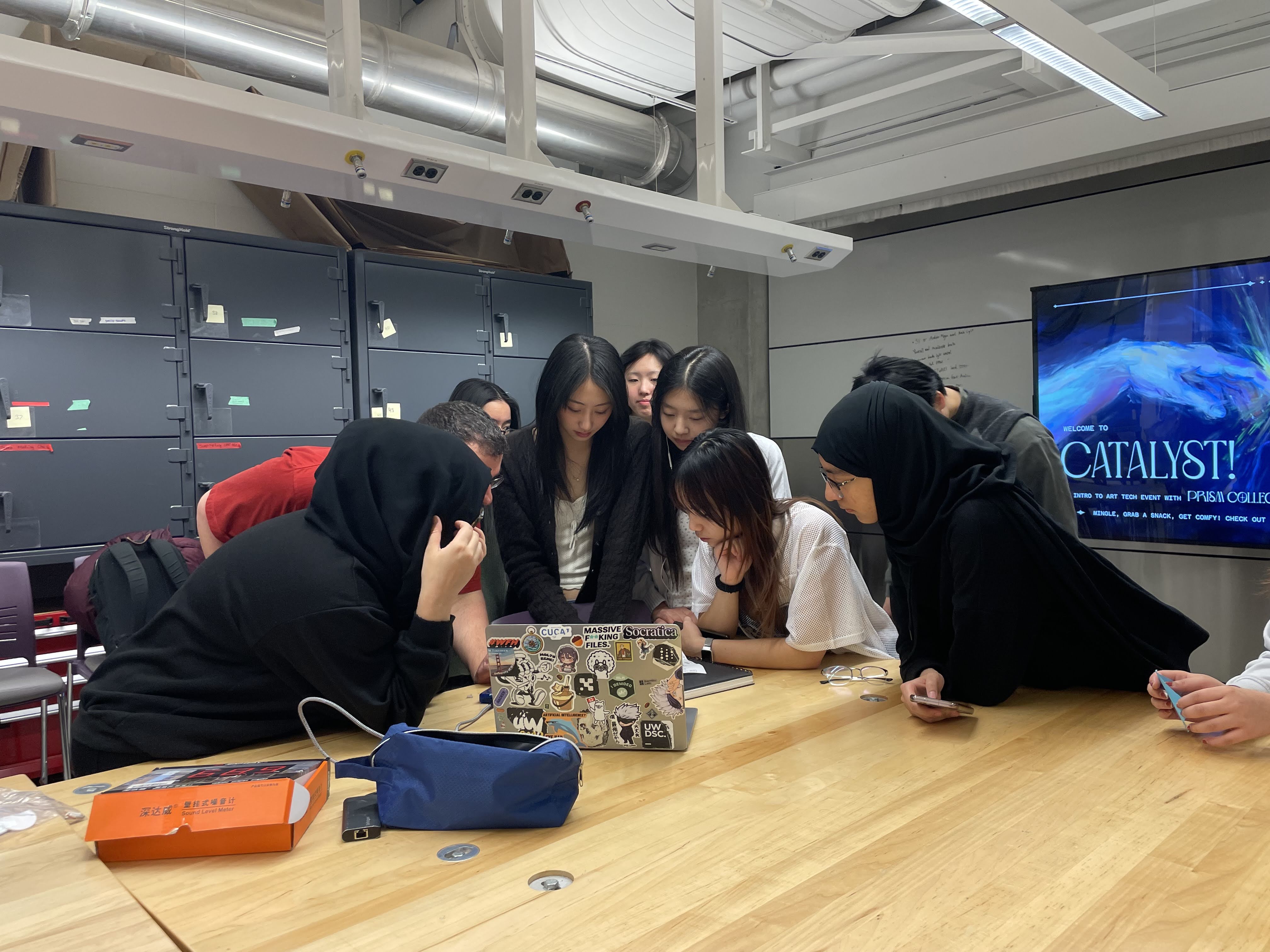
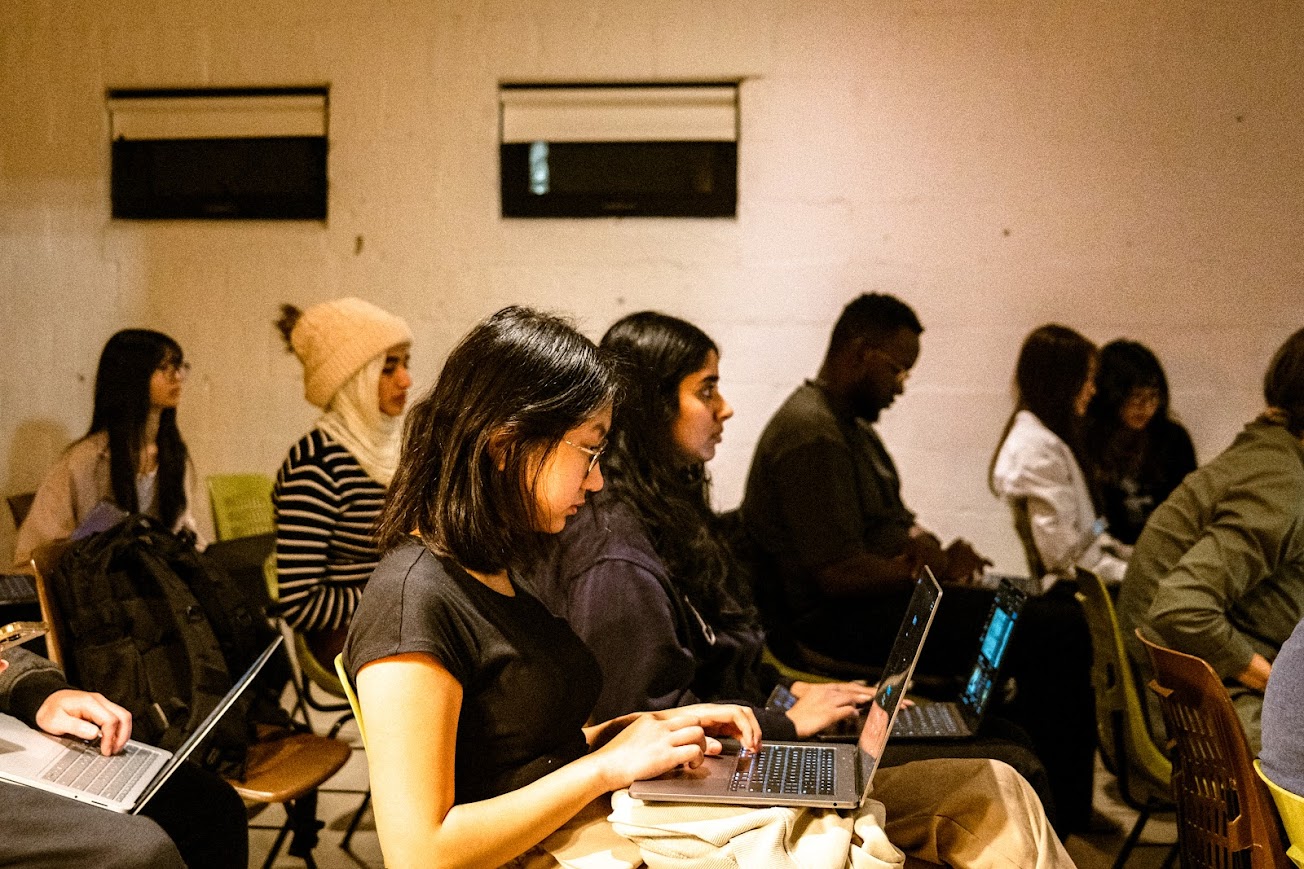
- Skill Shares: Weekly technical workshops led by members on topics like TouchDesigner, Arduino, 3D printing, laser cutting, generative AI
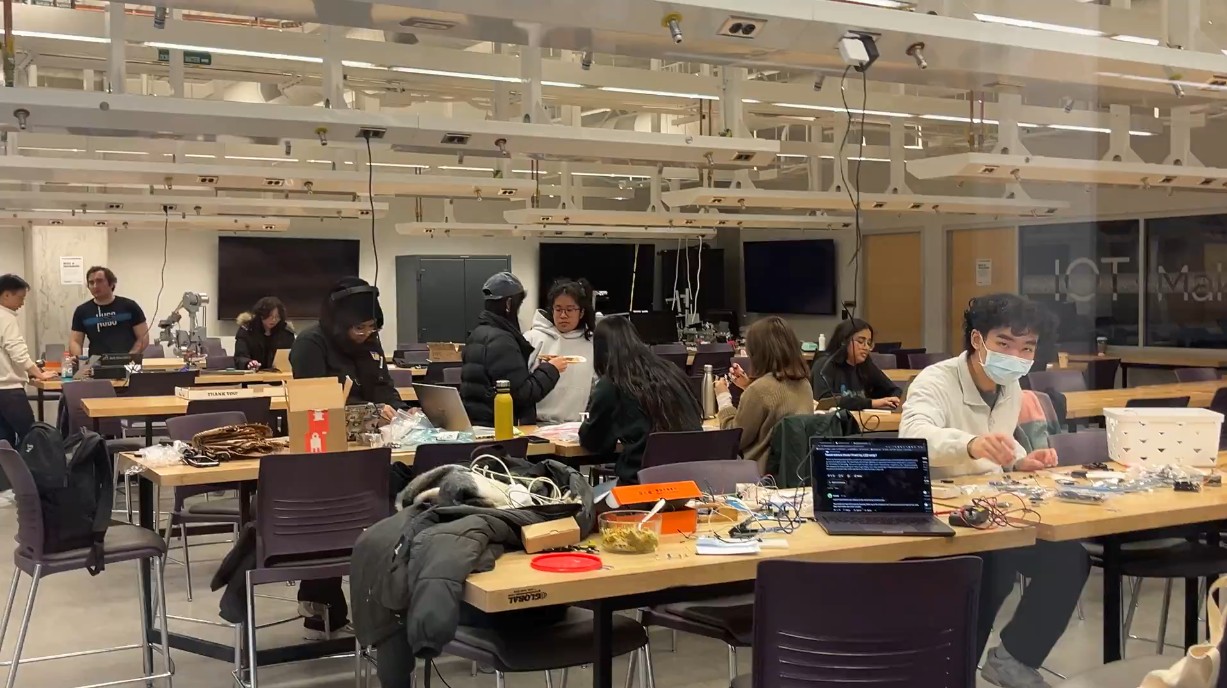
- Work Sessions: Bi-weekly open studio nights in campus makerspace for collaborative building and peer feedback
- Community Events: Monthly public exhibitions, artist talks, and interdisciplinary symposia open to broader Waterloo community
Major Projects & Installations
Mind Garden (Nov 2024)
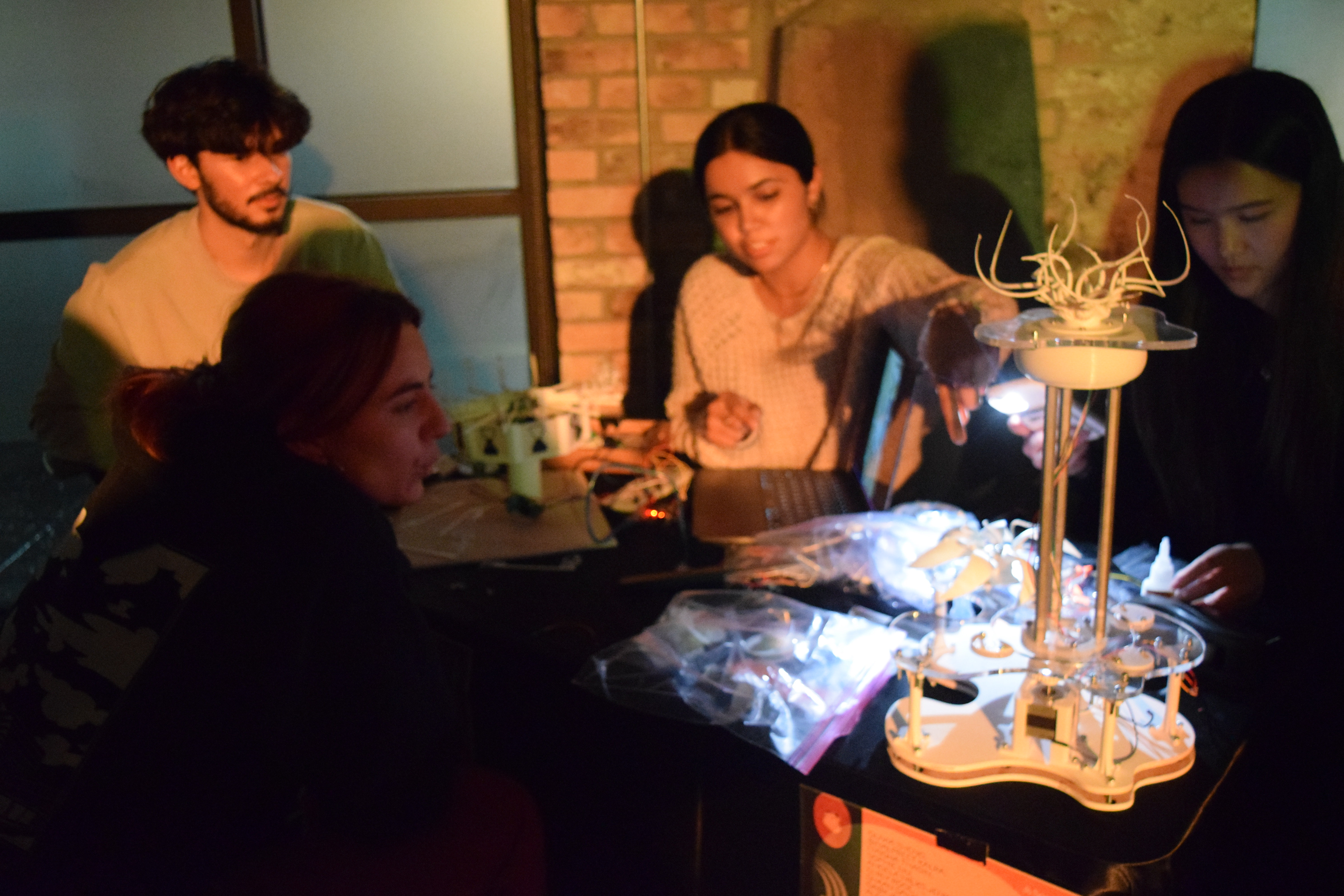
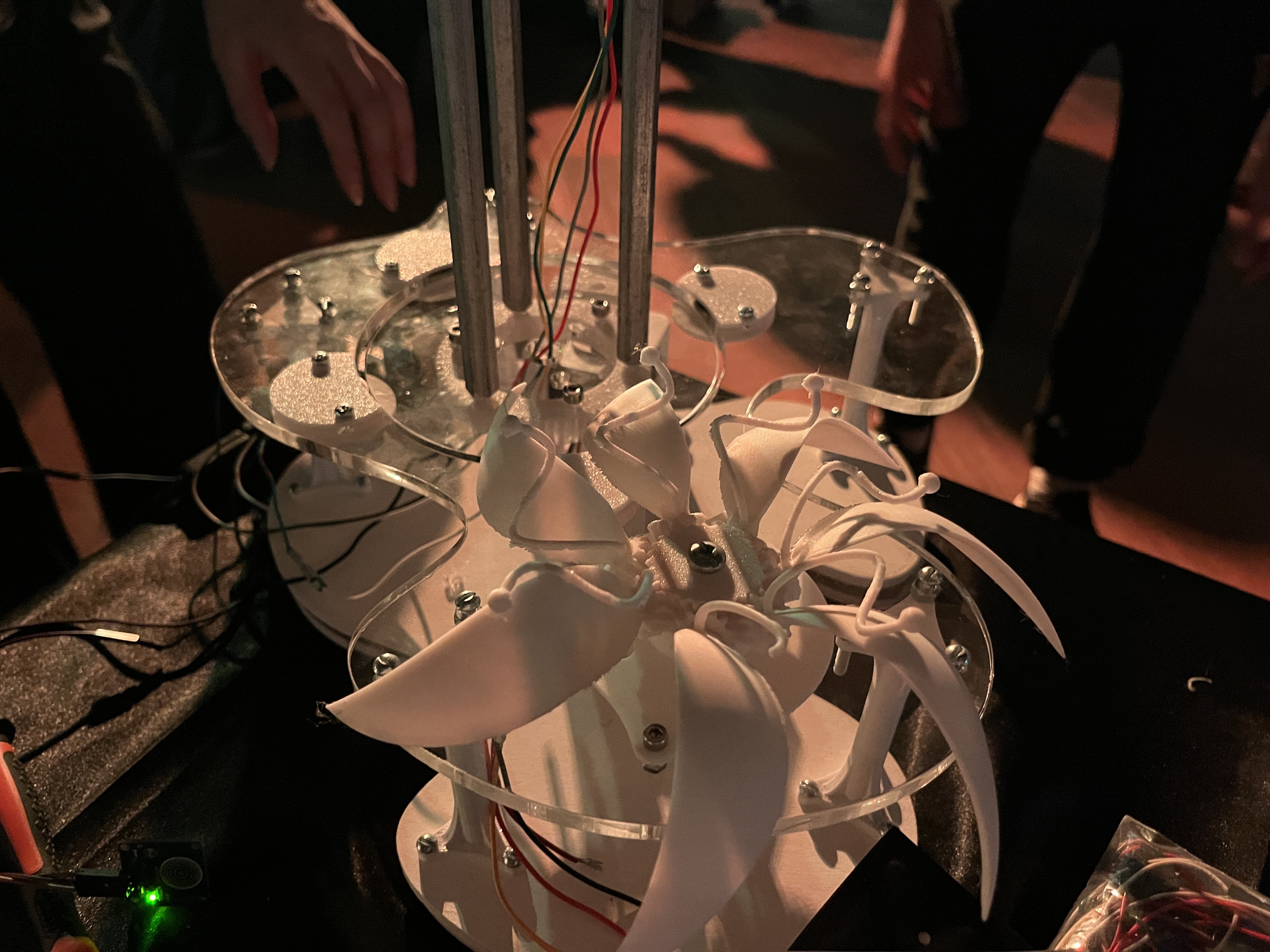
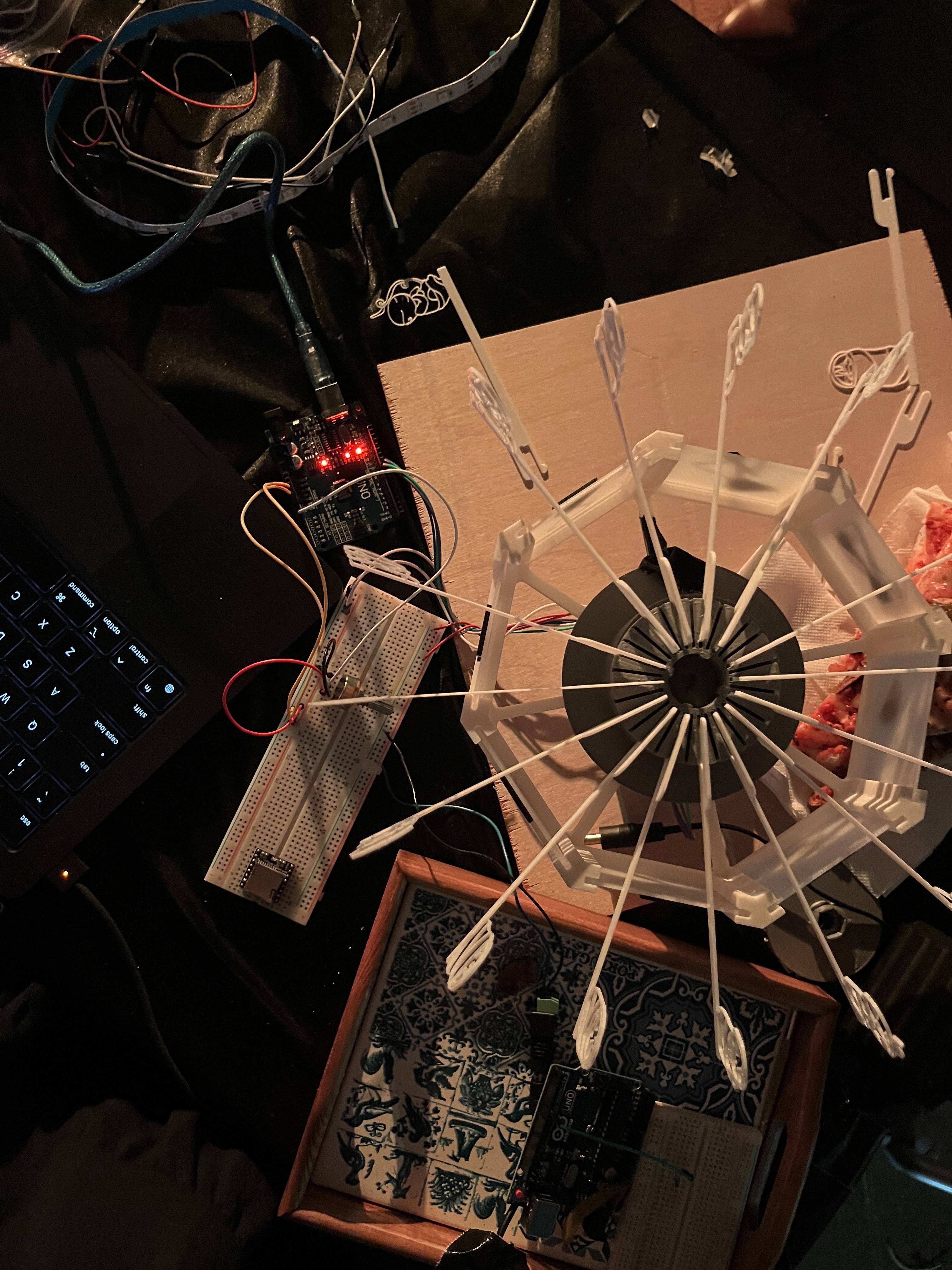
Kinetic sculpture installation exhibited at Waterloo Museum representing various cognitive phenomena through motorized mechanical flowers. Each flower embodies a different aspect of human consciousness (memory formation, creative insight, emotional regulation) through unique motion profiles controlled by custom Arduino firmware.
- Technical Innovation: Custom servo trajectory planning using sinusoidal envelopes to create organic, lifelike motion
- Public Impact: 800+ museum visitors over 2-week exhibition, featured in local media coverage
- Interdisciplinary Collaboration: Team of 6 including mechanical engineers, cognitive science students, and visual artists
Socratica Symposium Exhibition (Oct 2024)
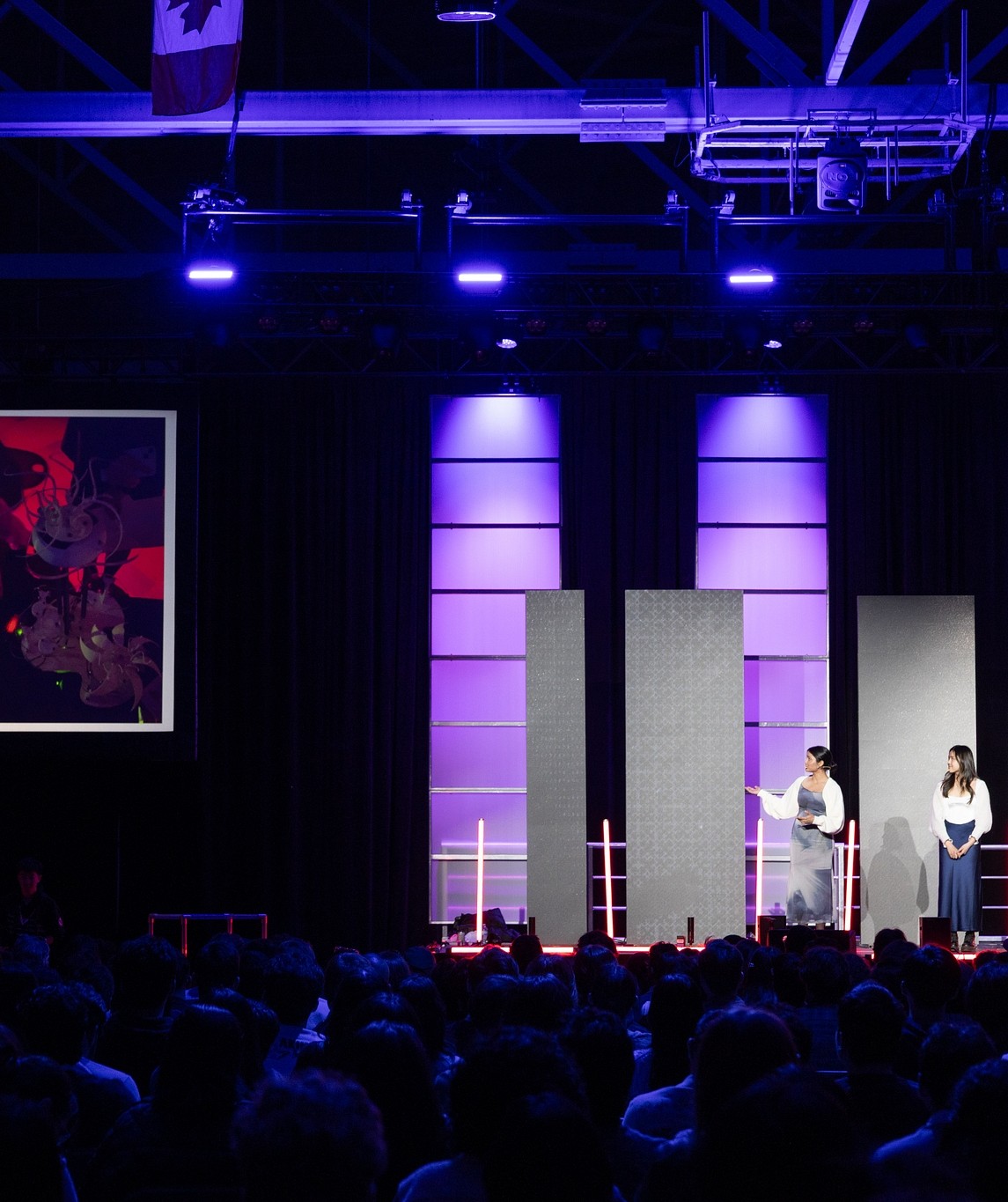
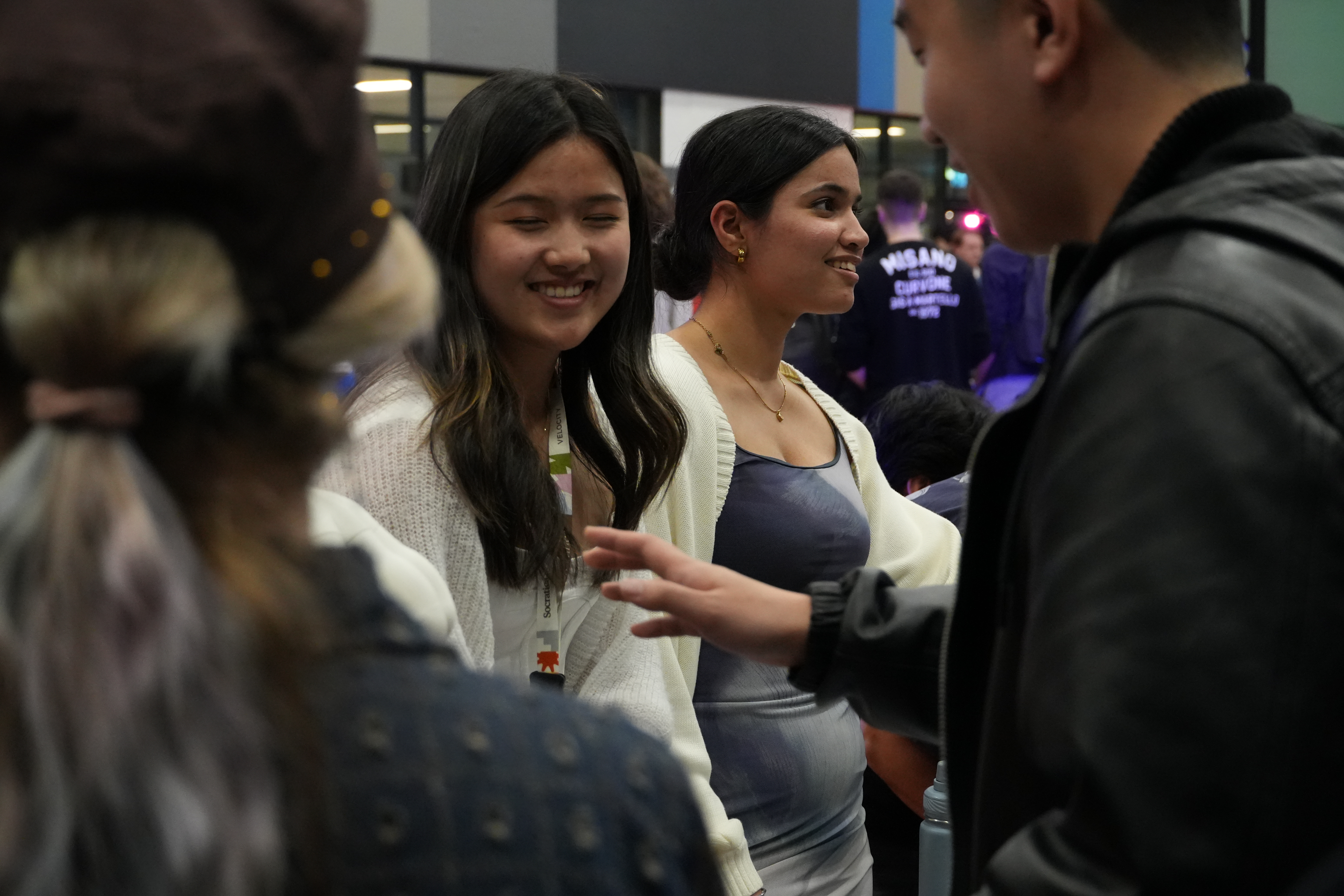
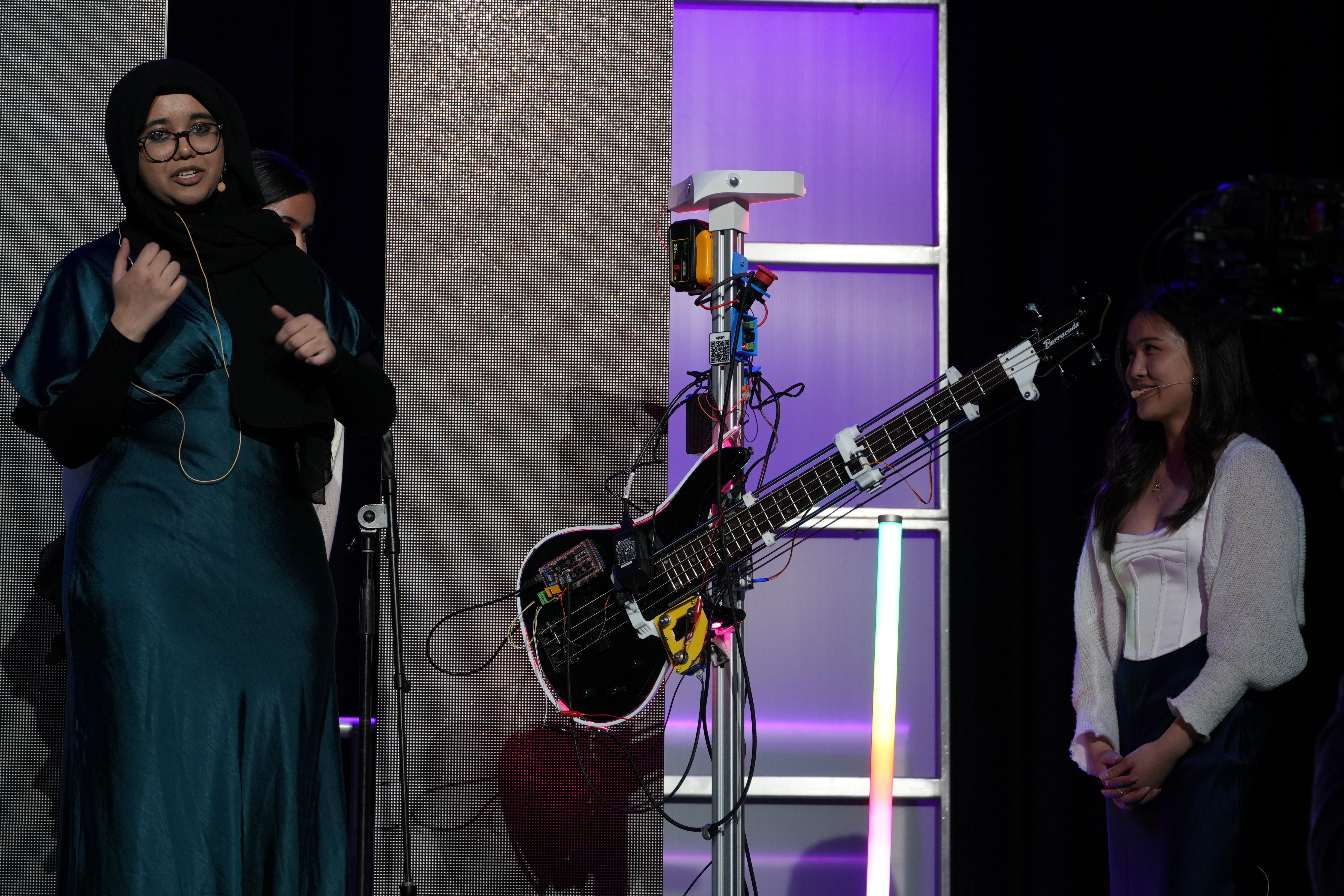
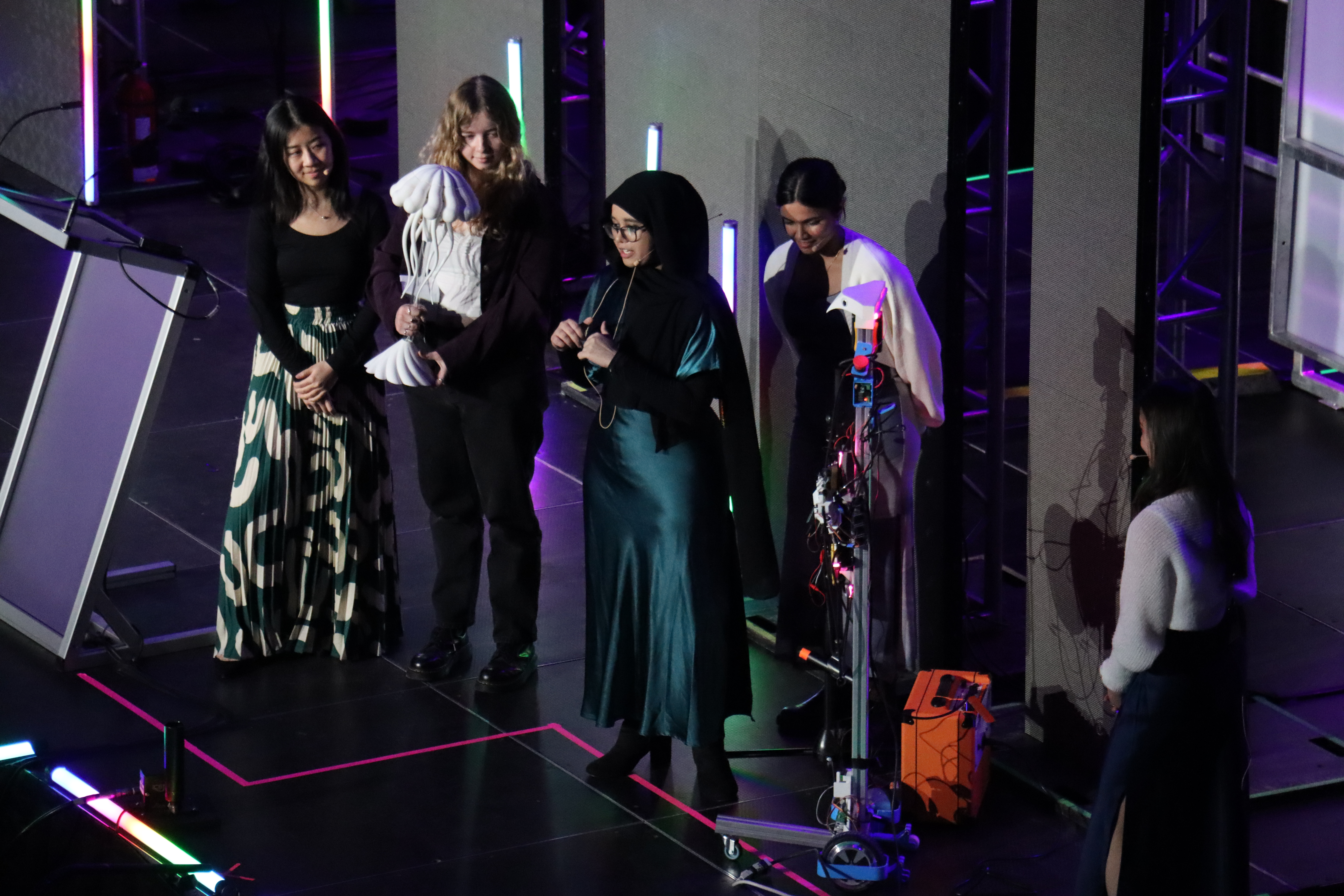
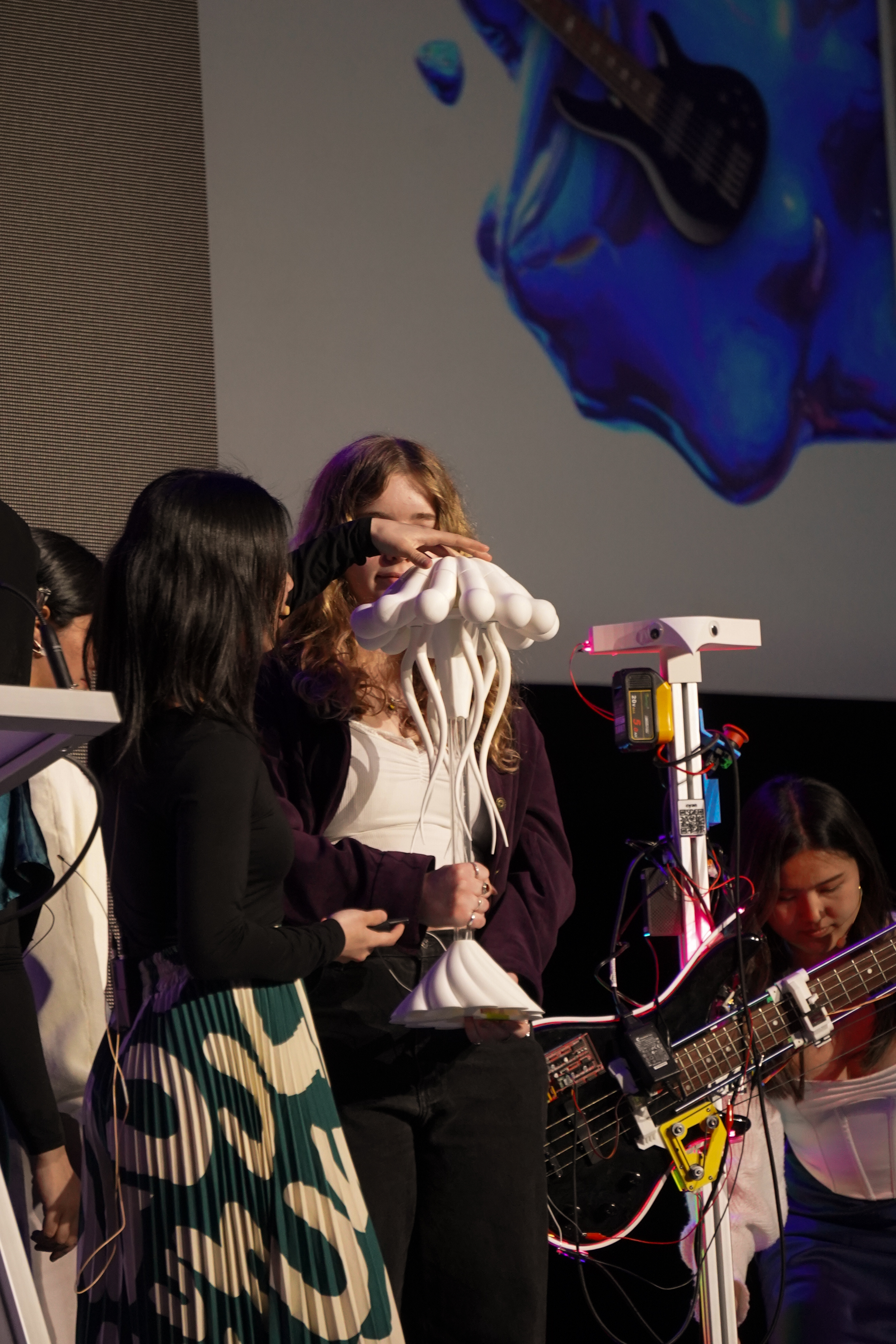
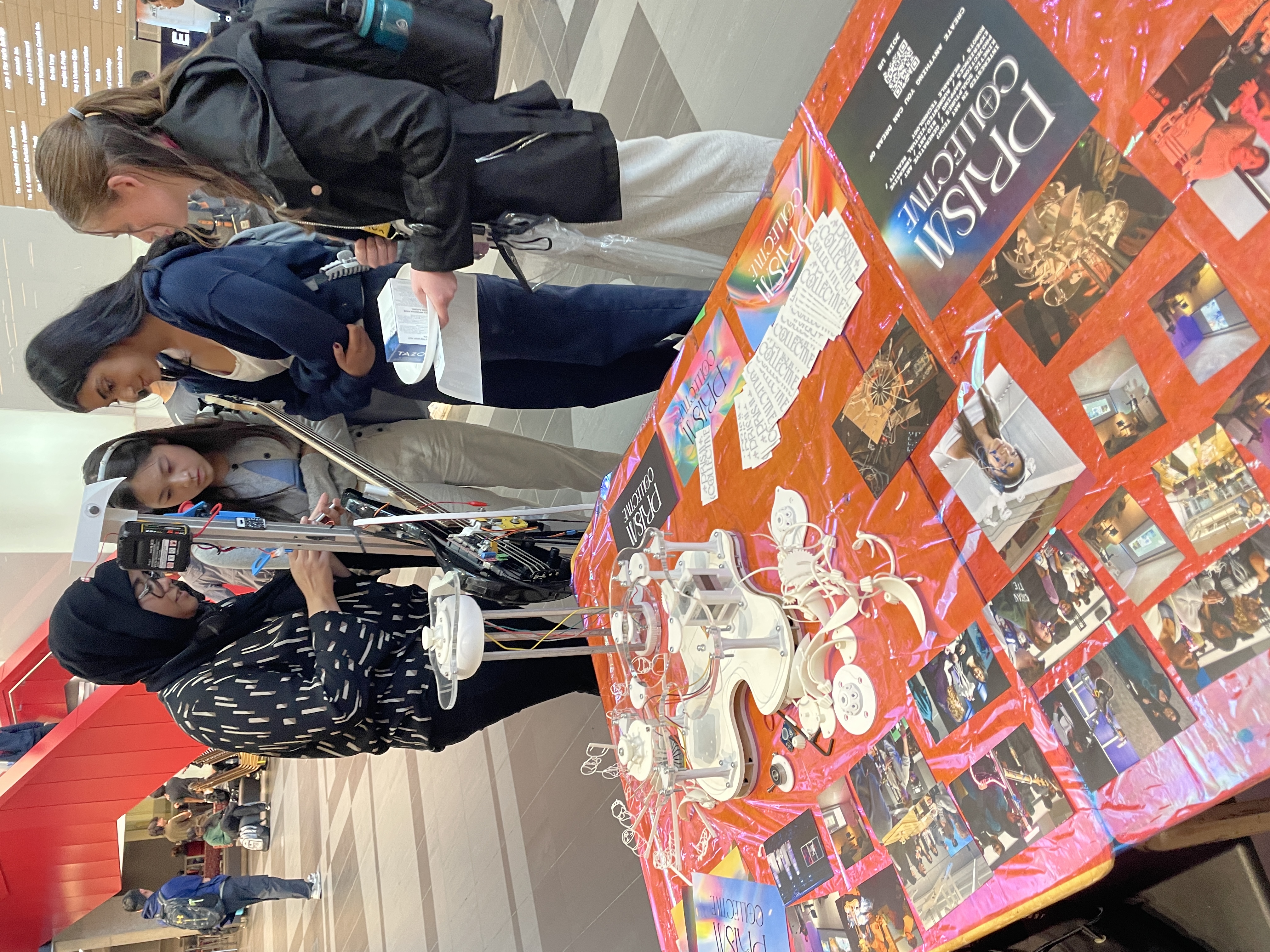
PRISM served as featured exhibitors at Socratica, a 200-person interdisciplinary symposium exploring intersections of technology, philosophy, and society. Our booth showcased 5 interactive installations demonstrating principles from biosignal processing, affective robotics, and generative systems.
Exhibited works:
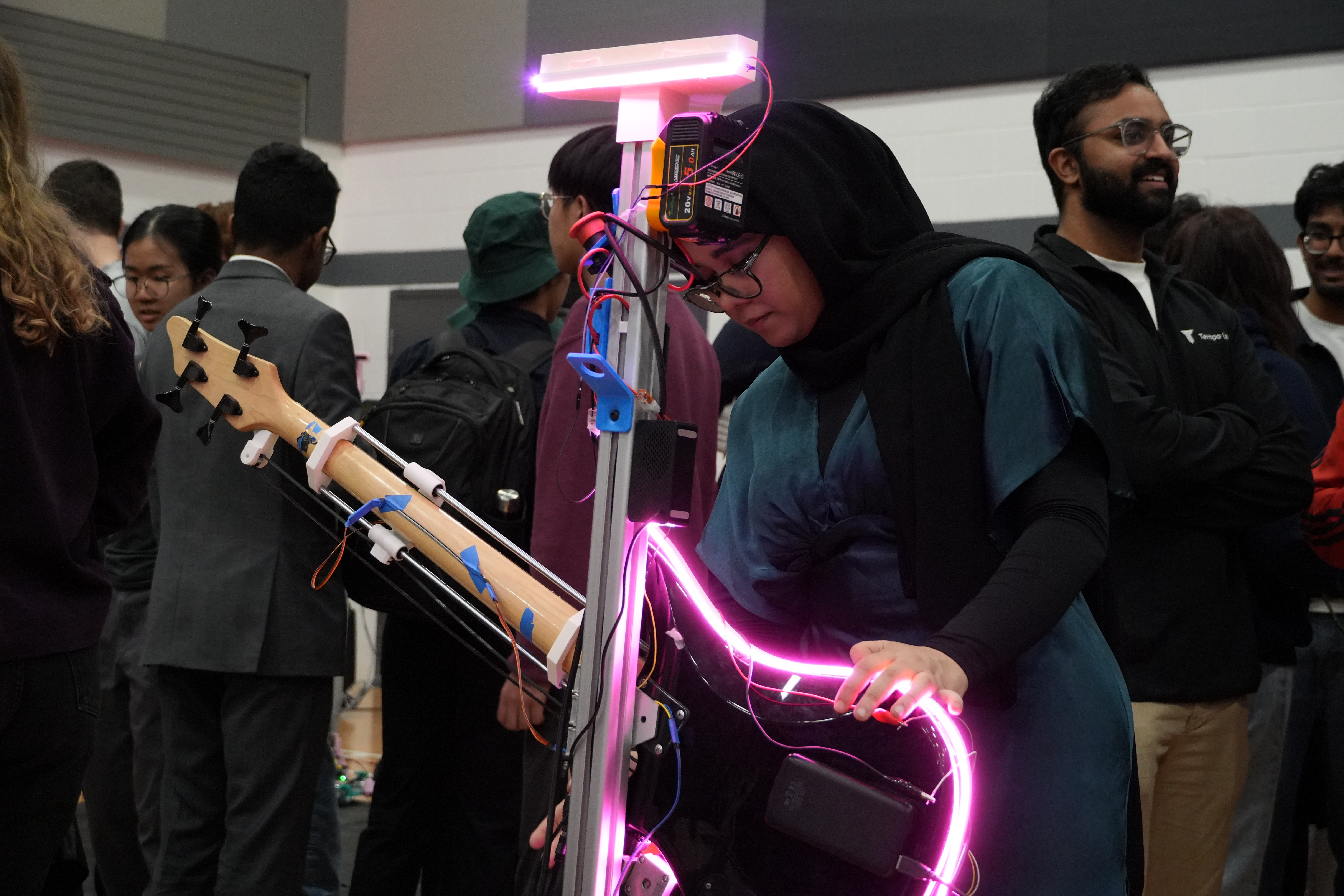
- Bass Robot: Audience-reactive kinetic sculpture using audio amplitude detection to drive mechanical tentacle motion
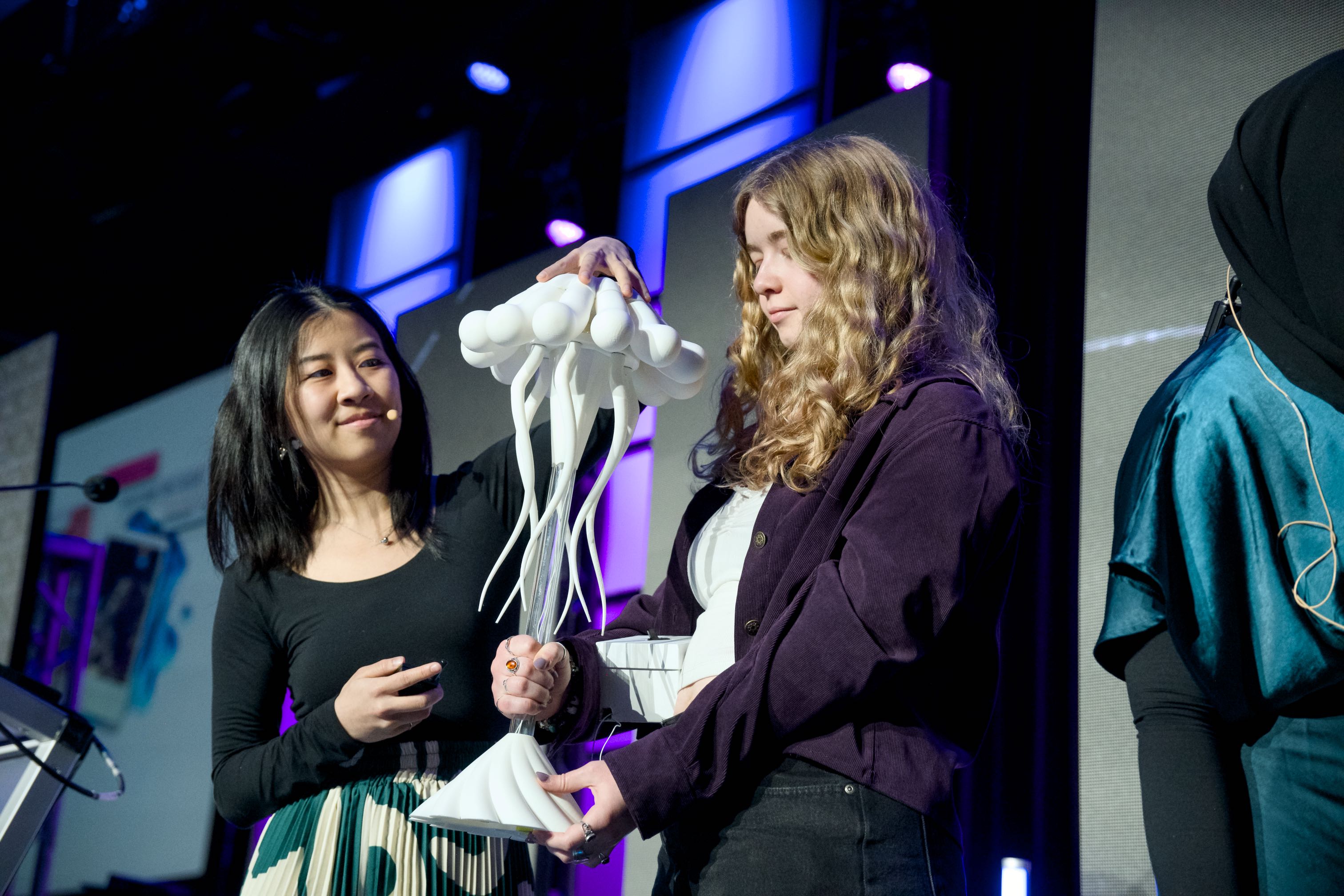
- Jellyfish Projection Mapping: Real-time generative visuals (TouchDesigner) responding to room occupancy via depth camera
- EMG-Driven Wearable: Somatic Bloom prototype demonstrating facial expression to kinetic output transduction
- VR Neural Interface Demo: Speculative interface allowing users to "sculpt" 3D forms via imagined hand movements (simulated BCI)
Symposium Presentations
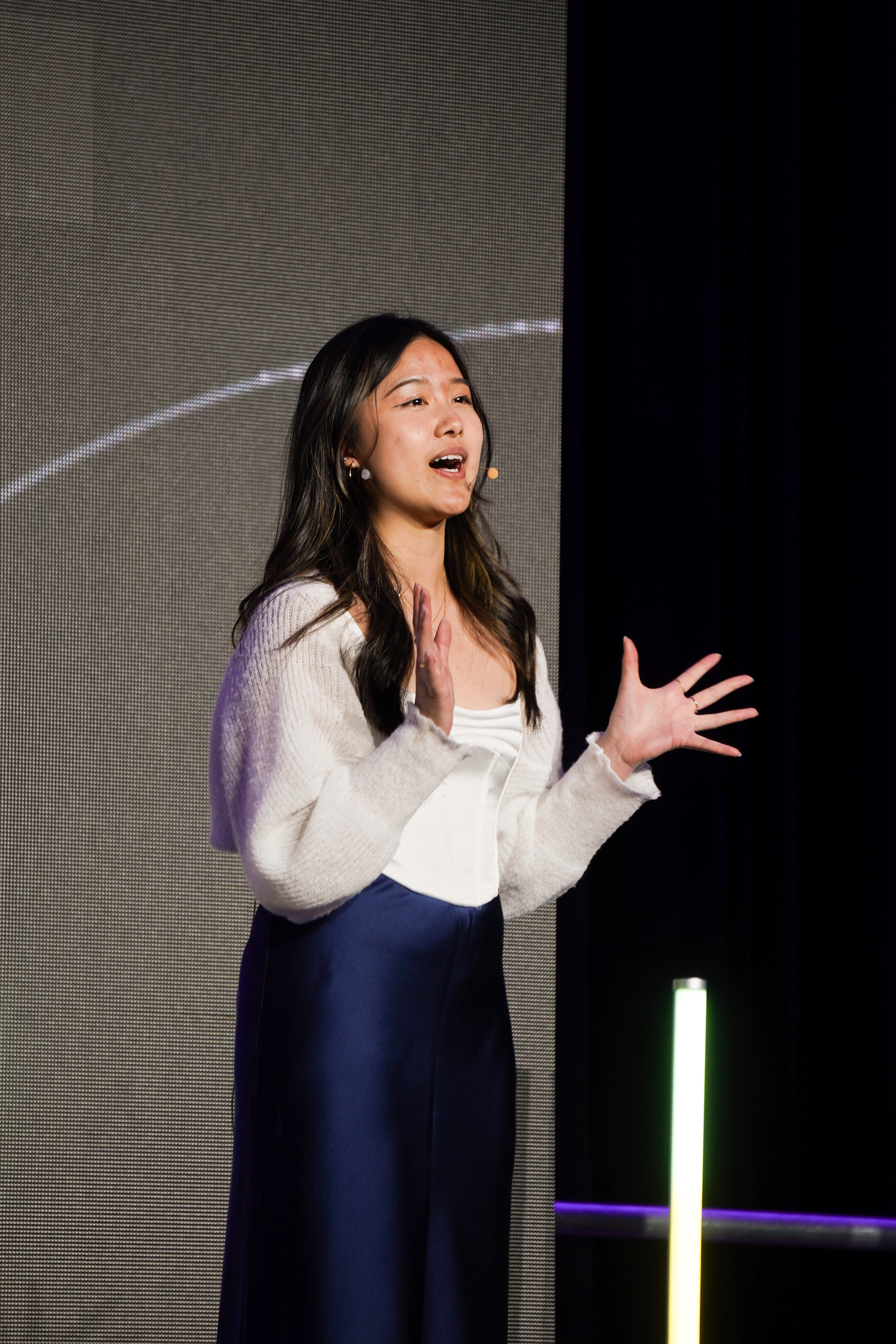
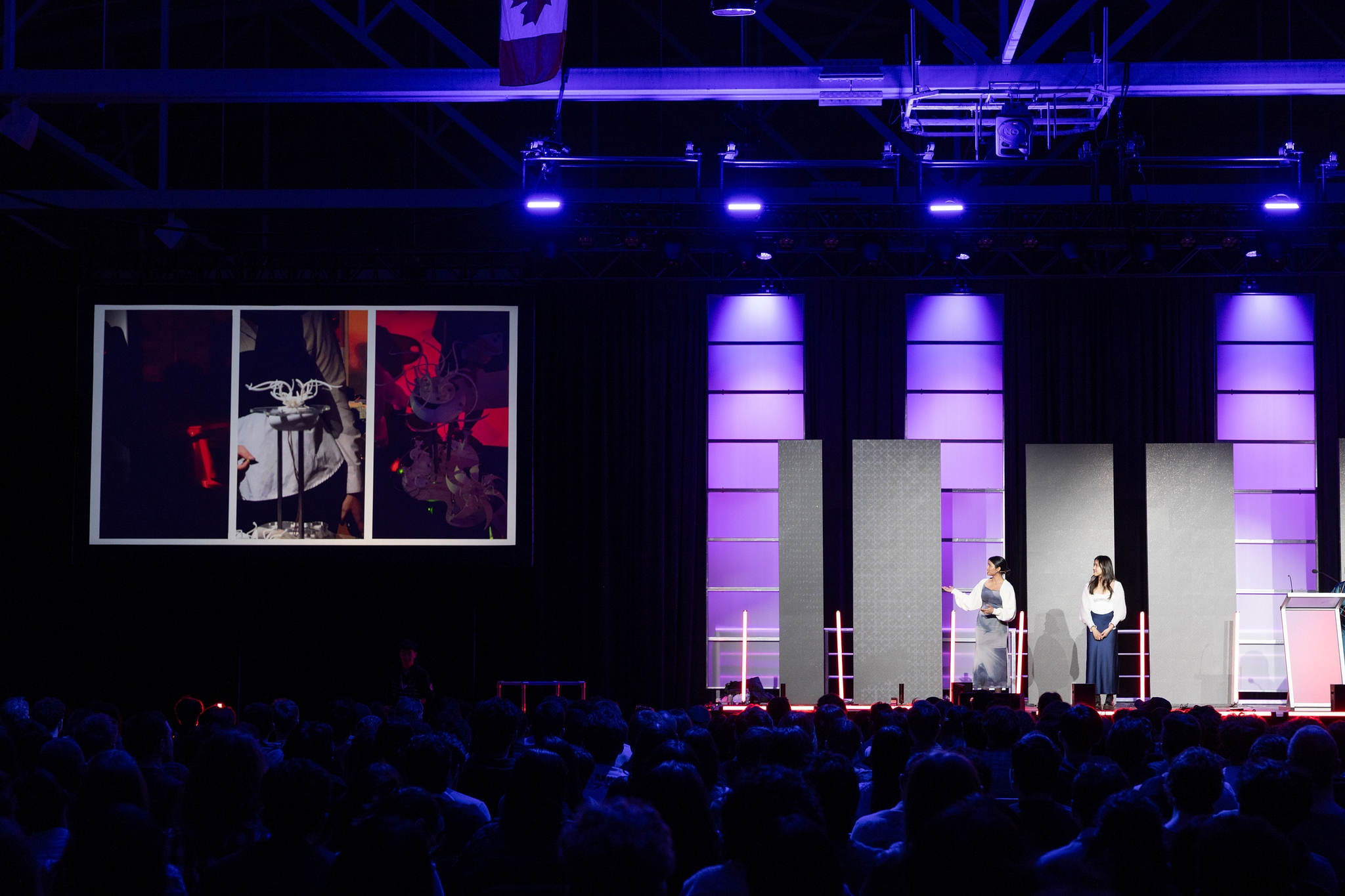
In addition to exhibition presence, PRISM members delivered talks on creative technology practice and research translation:
- Keynote Panel: "From Lab to Gallery: Translating Technical Research into Public Experience" - Discussion on challenges and opportunities in science communication through experiential art
- Technical Workshop: "Introduction to Biosignal-Driven Interactive Art" - Hands-on session teaching audience to build simple EMG-controlled LED installations
Educational Outreach & Workshops
Toronto VR Workshop Series (Nov 2024)
PRISM organized and led a 3-day intensive workshop introducing 40 Toronto high school students to spatial computing and immersive experience design. Partnered with local VR studio to provide access to Quest 3 headsets and Unity development environments.
Curriculum highlights:
- Day 1: Introduction to VR hardware, human perception in immersive environments, and design principles for 3D interfaces
- Day 2: Hands-on Unity development - students built simple interactive VR scenes with grabbable objects and teleportation locomotion
- Day 3: Guided project work - teams of 4 designed and prototyped VR experiences on themes of education, mental health, or environmental awareness
Outcomes: 85% of participants reported increased interest in computer science/engineering careers; 12 students subsequently enrolled in university CS programs citing workshop as pivotal experience.
TouchDesigner Creative Coding Workshop
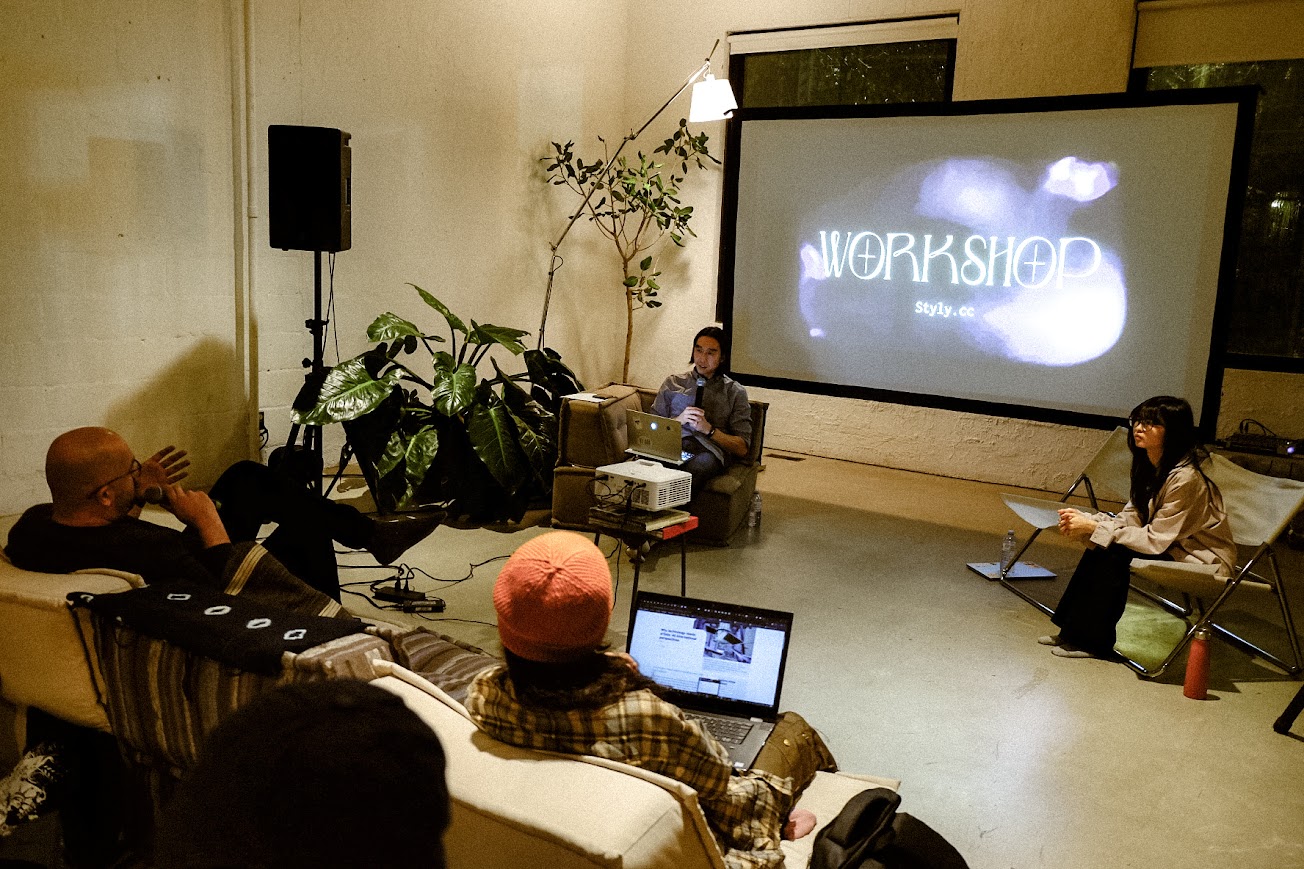
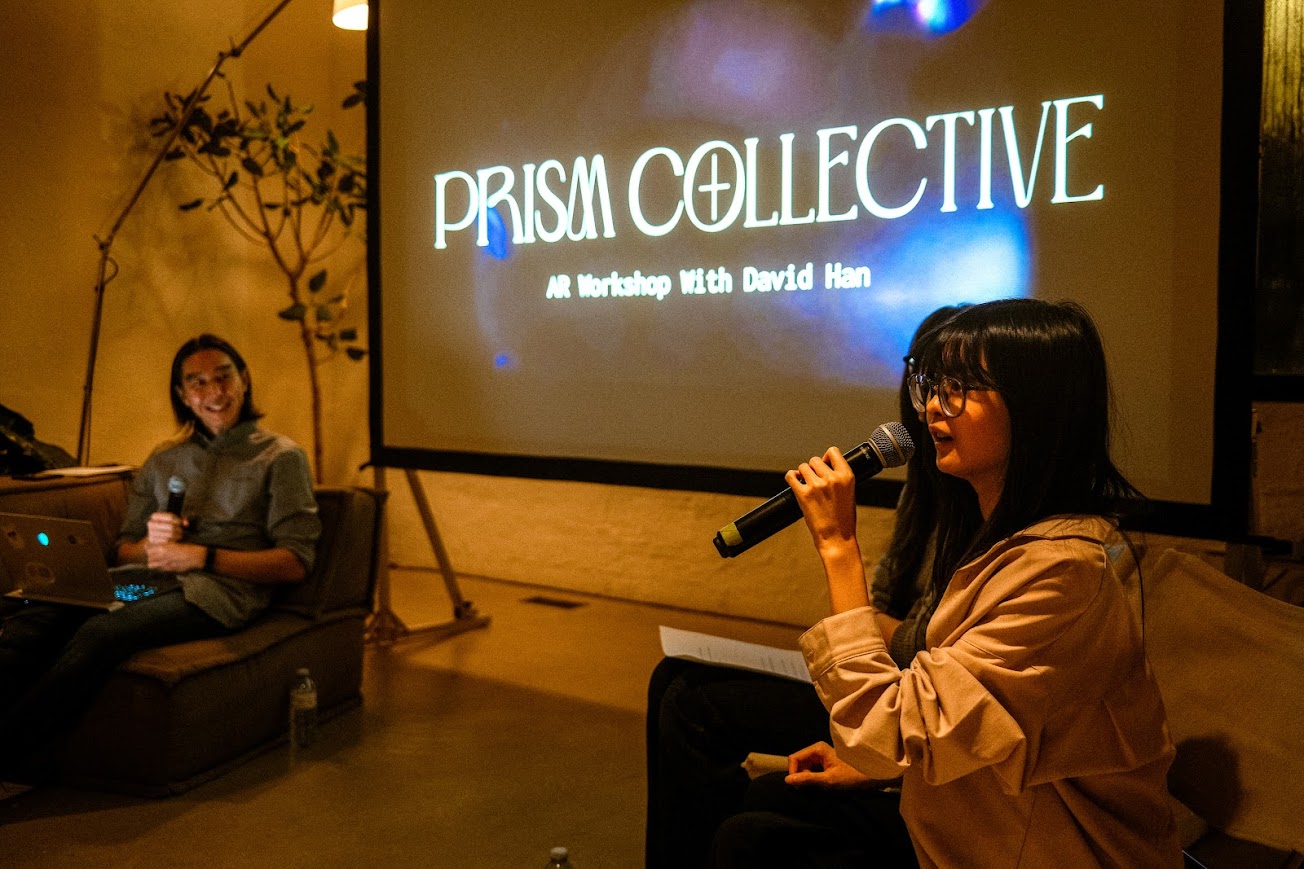
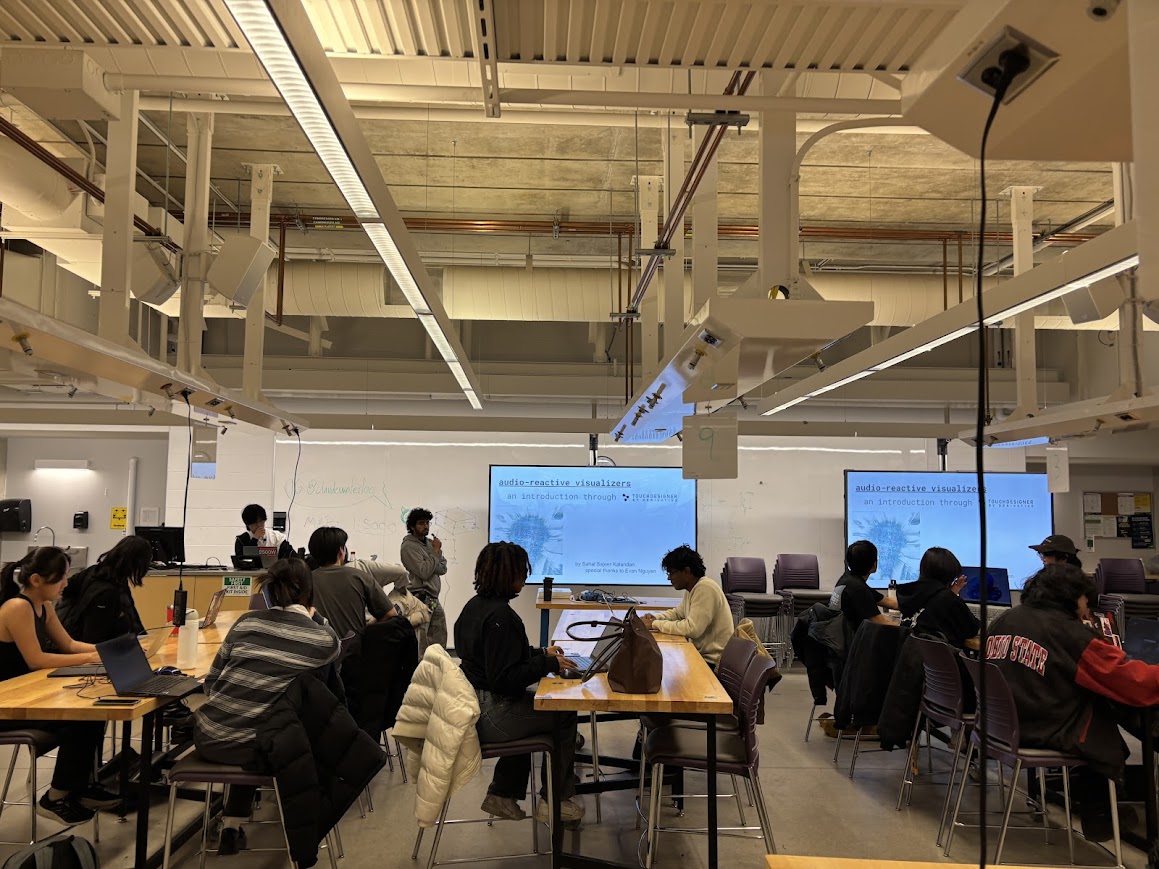
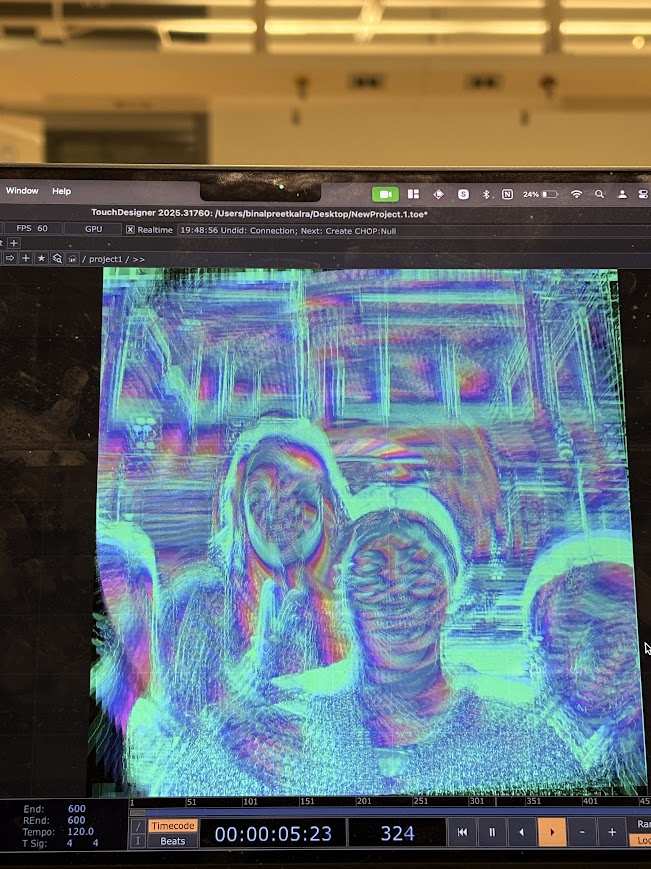
Monthly workshop series teaching generative art and real-time visual systems using TouchDesigner. Curriculum designed for beginners with no prior programming experience, emphasizing visual node-based paradigm over traditional code.
Topics covered:
- Node graph fundamentals: operators, parameters, and data flow
- Generative geometry: GLSL shaders, instancing, and procedural modeling
- Interactive systems: sensor input (Kinect, webcam, MIDI controllers), audio reactivity
- Projection mapping: UV mapping, edge blending, and multi-projector calibration
Museum Partnerships & Public Exhibition
Waterloo Region Museum Residency
PRISM established an ongoing partnership with Waterloo Region Museum for quarterly rotating exhibitions of member work. This provides:
- Professional Exhibition Experience: Members gain curatorial skills, museum-quality fabrication standards, and public engagement practice
- Community Access: Museum attendance ~15,000/year exposes diverse audiences to creative technology practice
- Institutional Validation: Museum endorsement elevates perception of student technical-art work as culturally valuable

Impact & Growth Metrics
Community Growth
- Membership: 120+ active members (Oct 2024 - Present), diverse representation across 8 academic departments
- Gender Diversity: 45% women/non-binary members (vs. ~25% in UWaterloo engineering programs), achieved through intentional inclusive recruitment
- Retention: 82% of members active for 2+ consecutive terms, indicating strong community engagement
Public Reach
- Exhibition Attendance: 2000+ unique visitors across museum exhibitions and symposium events
- Workshop Participants: 150+ individuals trained through skill shares and outreach programs
- Media Coverage: Featured in university publications, local news (CBC Kitchener-Waterloo), and tech blogs
Academic Impact
- Research Translation: 8 member projects directly derived from academic research (affective computing, soft robotics, computational fabrication)
- Conference Presentations: 3 papers accepted to ACM conferences on interactive art and human-computer interaction
- Industry Partnerships: Sponsorships from Unity Technologies, Arduino, and local makerspaces totaling $15,000
Future Vision
Organizational Sustainability
- Formalize Leadership Structure: Transition from founder-driven to democratically elected rotating leadership to ensure continuity beyond graduation cycles
- Secure Dedicated Space: Negotiate university allocation of permanent studio space for tools, project storage, and social gathering (current model relies on shared makerspace)
- Expand Funding Base: Diversify revenue through corporate sponsorships, grants (Canada Council for the Arts), and crowdfunding for large installations
Programmatic Expansion
- Public Art Commissions: Pursue municipal contracts for permanent outdoor installations in Waterloo public spaces
- Artist Residency Program: Host 2-4 visiting artists annually to mentor students and cross-pollinate practices from professional art world
- High School Pipeline: Formalize partnerships with 5+ regional high schools for recurring workshops and mentorship, building pathway to university creative tech programs
Research Agenda
- Documentation & Study: Longitudinal ethnographic study of PRISM as model for interdisciplinary creative tech education (potential publication in engineering education journals)
- Public Understanding of Research: Systematic evaluation of whether experiential art installations improve science literacy vs. traditional communication methods
- Inclusive Design Practices: Investigate how participatory design methods in creative tech can broaden participation in STEM fields